Cost-effective and customizable FULLERENE99685-96-8 99685-96-8 for sale
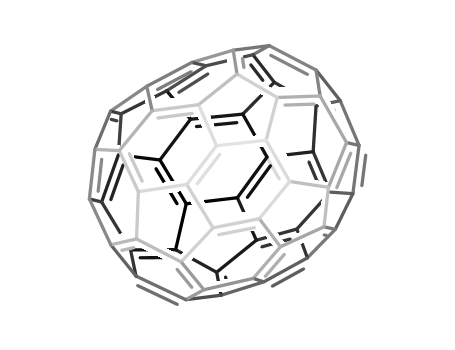
- Molecular Formula:C60
- Molecular Weight:720.66
- Appearance/Colour:black to brown crystalline powder
- Melting Point:>280 °C(lit.)
- Refractive Index:1.813
- Boiling Point:500-600℃ subl.
- Flash Point:94 °C
- PSA:0.00000
- Density:3.43 g/cm3
- LogP:17.73000
FULLERENE(Cas 99685-96-8) Usage
|
|
|
|
History and Development
|
Buckminsterfullerene (C60) was first discovered in 1985 by Richard Smalley, Robert Curl, James Heath, Sean O'Brien, and Harold Kroto, who were awarded the Nobel Prize in Chemistry in 1996 for their discovery. Buckminsterfullerene is named after Richard Buckminster Fuller, an American architect and inventor known for popularizing geodesic dome structures. The molecule's spherical shape resembles the geodesic domes designed by Fuller. |
|
Production Methods
|
Buckminsterfullerene can be produced through various methods, including laser ablation, arc discharge, and chemical vapor deposition. |
|
General Description
|
This product has been enhanced for energy efficiency. |
InChI:InChI:1S/C60/c1-2-5-6-3(1)8-12-10-4(1)9-11-7(2)17-21-13(5)23-24-14(6)22-18(8)28-20(12)30-26-16(10)15(9)25-29-19(11)27(17)37-41-31(21)33(23)43-44-34(24)32(22)42-38(28)48-40(30)46-36(26)35(25)45-39(29)47(37)55-49(41)51(43)57-52(44)50(42)56(48)59-54(46)53(45)58(55)60(57)59
99685-96-8 Relevant articles
Cage-Expansion of Fullerenes
Zhang, Sheng,Hashikawa, Yoshifumi,Murata, Yasujiro
supporting information, p. 12450 - 12454 (2021/08/20)
Despite the first proposal on the cage i...
Stereoselective synthesis of amino-substituted cyclopentafullerenes promoted by magnesium perchlorate/ferric perchlorate
Ma, Wan,Wang, Kun,Huang, Cheng,Wang, Hui-Juan,Li, Fa-Bao,Sun, Rui,Liu, Li,Liu, Chao-Yang,Asiri, Abdullah M.
supporting information, p. 964 - 974 (2020/02/15)
A facile one-step reaction of [60]fuller...
DMAP-Mediated Synthesis of Fulleropyrrolines: Reaction of [60]Fullerene with Aromatic Aldehydes and Arylmethanamines in the Absence or Presence of Manganese(III) Acetate
Peng, Jie,Xiang, Jun-Jun,Wang, Hui-Juan,Li, Fa-Bao,Huang, Yong-Shun,Liu, Li,Liu, Chao-Yang,Asiri, Abdullah M.,Alamry, Khalid A.
, p. 9751 - 9764 (2017/09/22)
A series of scarce fulleropyrrolines wer...
CF2-Bridged C60 Fullerene Dimers and their Optical Transitions
Dallas, Panagiotis,Zhou, Shen,Cornes, Stuart,Niwa, Hiroyuki,Nakanishi, Yusuke,Kino, Yasuhiro,Puchtler, Tim,Taylor, Robert A.,Briggs, G. Andrew. D.,Shinohara, Hisanori,Porfyrakis, Kyriakos
, p. 3540 - 3543 (2017/11/22)
Fullerene dyads bridged with perfluorina...
99685-96-8 Process route
-
-
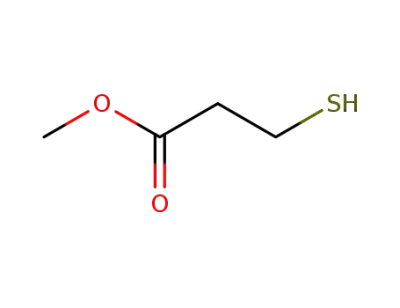
2935-90-2
Methyl 3-mercaptopropionate
-
-
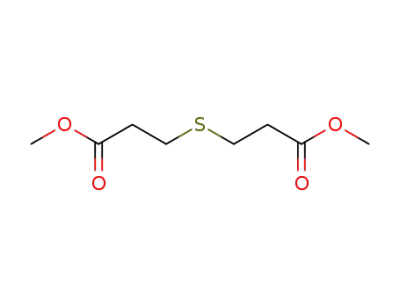
4131-74-2
Dimethyl 3,3'-thiodipropionate
-
-
99685-96-8,161105-99-3,161106-00-9,111138-12-6,133318-63-5,134053-11-5,134931-35-4,134931-36-5,139703-76-7,145633-27-8,175414-73-0,175414-74-1,175414-75-2,175519-12-7,175519-13-8,175519-14-9,175519-15-0,136376-46-0,144906-37-6,144906-38-7,151767-00-9,152882-97-8,152882-98-9,152882-99-0,153062-34-1,154171-74-1,154171-75-2,154333-99-0,154334-00-6,154397-63-4,154460-59-0,199456-56-9,108739-25-9,120329-57-9,120329-58-0
fullerene-C60
Conditions
| Conditions |
Yield |
|
at 140 ℃;
for 0.166667h;
Glovebox;
Inert atmosphere;
|
|
-
-
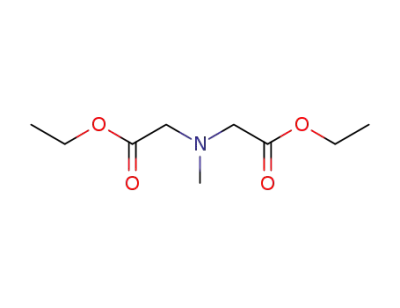
5412-66-8
diethyl 2,2'-(methylimino)diacetate
-
-
99685-96-8,161105-99-3,161106-00-9,111138-12-6,133318-63-5,134053-11-5,134931-35-4,134931-36-5,139703-76-7,145633-27-8,175414-73-0,175414-74-1,175414-75-2,175519-12-7,175519-13-8,175519-14-9,175519-15-0,136376-46-0,144906-37-6,144906-38-7,151767-00-9,152882-97-8,152882-98-9,152882-99-0,153062-34-1,154171-74-1,154171-75-2,154333-99-0,154334-00-6,154397-63-4,154460-59-0,199456-56-9,108739-25-9,120329-57-9,120329-58-0
fullerene-C60
Conditions
| Conditions |
Yield |
|
With
perchloric acid;
In
ethanol; toluene;
Reagent/catalyst;
Irradiation;
|
|
99685-96-8 Upstream products
99685-96-8 Downstream products
-
150493-27-9
ethyl 3′H-cyclopropa[1,9](C60-Ih)[5,6]fullerene-3′-carboxylate
-
150493-29-1
tert-butyl 3′H-cyclopropa[1,9](C60-Ih)[5,6]fullerene-3′-carboxylate
-
154798-96-6
C75H10FNO3